 Jan 17 2026
 Jan 10 2026
 Jan 03 2026
 Dec 27 2025
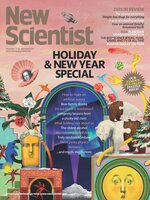 13-26 December 2025
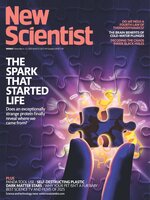 Dec 06 2025
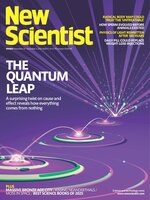 Nov 29 2025
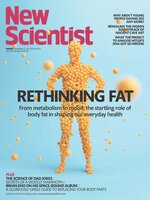 Nov 22 2025
 Nov 15 2025
 Nov 08 2025
 Nov 01 2025
 Oct 25 2025
 Oct 18 2025
 Oct 11 2025
 Oct 04 2025
 Sep 27 2025
 Sep 20 2025
 Sep 13 2025
 Sep 06 2025
 Aug 30 2025
 Aug 23 2025
 Aug 16 2025
 Aug 09 2025
 Aug 02 2025
New Scientist covers the latest developments in science and technology that will impact your world. New Scientist employs and commissions the best writers in their fields from all over the world. Our editorial team provide cutting-edge news, award-winning features and reports, written in concise and clear language that puts discoveries and advances in the context of everyday life today and in the future.
What the chatbot ordered • AI could be the next big thing in psychiatry – provided we guard against its flaws
New Scientist
Hope for an endangered frog
Exercise may match antidepressants • We’re learning more about the benefits of exercise for treating depression, even if the exact reasons why remain unclear, reports Carissa Wong
Filling a big gap in our family tree • The jawbones and vertebrae of a hominin that lived 773,000 years ago could help answer some of the great questions of human evolution, finds James Woodford
Man whose gut made its own alcohol gets relief from faecal transplant
Low-density worlds reveal the secrets of planetary systems
Can we simulate a human brain? • Advances by the world’s most powerful supercomputers have raised hopes that they will be able to offer unprecedented insights into neuroscience, discovers Alex Wilkins
Fixing errors could come at a cost • The quest to make fault-tolerant quantum computers could eclipse the energy demands of the world’s most powerful supercomputers, finds Karmela Padavic-Callaghan
‘Knitted’ satellite to monitor Earth’s surface with radar
Eating more fibre might help you have a better night’s sleep
City-sized iceberg could soon fall apart
A better way to measure quantum objects
Obesity drugs are no quick fix • Drugs like Ozempic have transformed how we treat obesity, but studies show it doesn’t take long for people to regain weight if they come off them, reports Carissa Wong
Weight-loss drugs are effective, to a point • The rate of weight regain after discontinuing weight-loss drugs is faster than coming off behavioural weight-loss programmes.
Poison arrows may go back 60,000 years
Earliest signs of elephant butchery • A 1.78-million-year-old elephant skeleton found in Tanzania may mark a milestone in hominin development, finds James Woodford
Tree bark microbiome has overlooked role in climate
A warning from Greenland’s past • The Prudhoe ice dome disappeared during a warm period 7000 years ago, showing just how vulnerable the region is to climate change, discovers Alec Luhn
AI chatbots are missing serious women’s health issues
Weird clump in the early universe is hotter than normal
A cultural awakening • Our growing understanding of non-human cultures should change how we treat wildlife, say Philippa Brakes and Marc Bekoff
The neuroscience column • Time for a tidy-up We have only just started to understand how our brains clean themselves, but Helen Thomson finds promising evidence for how to boost this process
Going quantum
A weighty issue • With the market for anti-obesity drugs already worth billions, a timely book explores the controversial medicines, finds Alexandra Thompson
Whatever we desire • AI chatbots can take on many roles in our lives. What kind of relationships should we forge with them, asks Matthew Sparkes
New Scientist recommends
Living in turbulent times • Can we find a new way to tackle the anxiety that comes with ever-acclerating change? David Robson discovers interesting research in a flawed account
Your letters
Our elegant universe • The principle of symmetry has long guided physicists towards fundamental truths, but a stranger idea from quantum theory could be a deeper driving force, finds Jon...